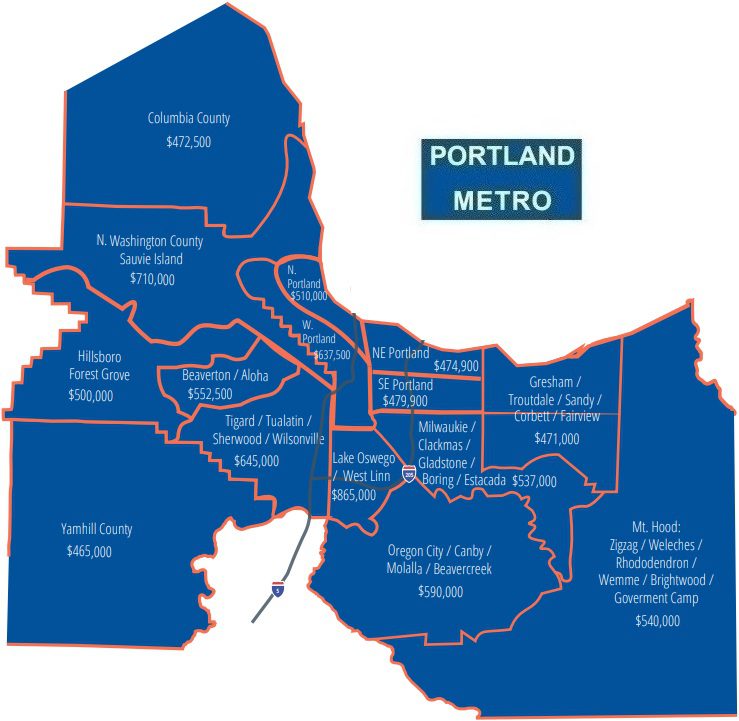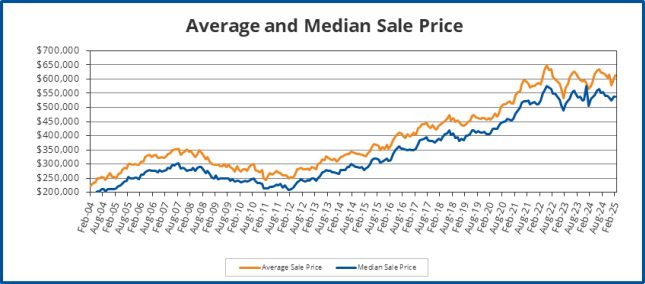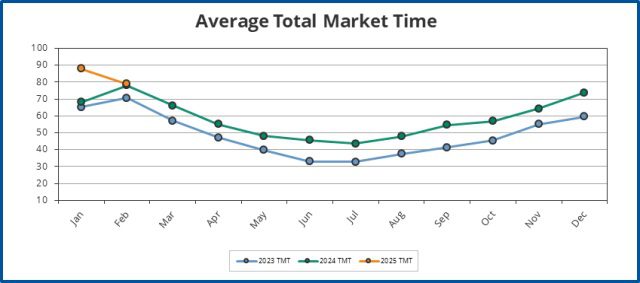
The average home price in the Portland Metro rose 2% in February. Home prices are now up 6% since December. I witnessed a couple of very intense bidding wars in February. One was on a cosmetic fixer near Progress Ridge that I listed for $449,000. A few hundred people walked through the open houses and ultimately my seller received 12 offers. The other bidding war was on a remodeled house in Aloha listed for $540,000. They had 63 groups walk through the first weekend and the house received 9 offers. The price of both listings went in the ballpark of $40,000 over asking. Clearly housing market conditions are improving as we get closer to the spring market but this type of activity was more unusual than that. As mortgage rates rose in 2022, this led to much more muted bidding wars in 2023-2024. If we start seeing the intensity of competition for more houses rise to these levels, that would put Portland into the deepest seller’s market since the spring of 2022. Whether that will happen or not is yet to be seen. However, mortgage rates started to fall over the last 3 weeks which could very well bring more buyers off the sidelines.
The 30 year fixed rate averaged 6.65% last week. Mortgage rates have been falling due to concerns about the health of the U.S. economy. Mass layoffs in the public sector are a contributing factor but that doesn’t tell the whole story. Major aluminum producer Alcoa announced they anticipate 100,000 job losses in that sector due to the 25% tariff on aluminum imports. I am hearing from personal contacts of job cuts at some of the largest tech companies but it’s unclear which companies outside of Google are cutting jobs and how large the layoffs will be. Tesla might be the next large tech company to announce major layoffs as global demand for their cars has plummeted. Tesla stock has now fallen over 50% off its December highs as it leads the rest of the Magnificent Seven into correction territory. Nvidia and Google are both down just under 13% year to date as well. The reason the stock market is faltering is there is a lot of uncertainty about the changing business landscape. Investors, both foreign and domestic, are hitting the pause button on investments in the United States until they have a better understanding of what government policy will look like once the dust settles. This has now resulted in the S&P 500 and Dow Jones falling 10% off recent highs though both indexes recovered a little on Friday. The tech heavy Nasdaq Composite Index had fallen 12% since December 16th as of Friday as well.
One reason the performance of the stock market was so strong these last couple years was the resilience of the labor market. Many experts predicted we would see a recession in 2022, 2023, and 2024, but they were all wrong. I suggested we might see a recession coming up last September and again in December based on economic indicators. It appears that is what is now starting to play out in real time. There is only one actual definition of a recession, which is defined by two negative quarters of GDP growth, or in simpler terms the economy has to contract for half a year. We won’t have confirmation of that until the 2nd half of the year, if that is what is happening in Q1 through Q2 or Q2 through Q3. However, the Fed’s GDPNow tracker has flipped from showing 2.3% growth to a 2.4% contraction in Q1. This prediction is based on several indicators such as trade patterns and consumer confidence. The U.S. trade deficit jumped 34% to a record $131.4 billion in January. This was partially caused by market distortions from the rush to import goods before incoming tariffs. Based on that, at least one metric the GDPNow indicator relies on may not be entirely indicative of the trade situation going forward. At the same time, inflation adjusted U.S. consumer spending fell the most in 4 years in January with the University of Michigan Consumer Sentiment Index declining 10%. U.S. consumer savings rates also hit a 7 month high. The unemployment rate rose to 4.1% in February. We will likely see a further increase in the unemployment rate shortly due job cuts in both the public and private sectors. What history tells us is when the 3 month moving average of the unemployment rate rises 0.5% within a 3 month period, like it did as of July last year, it is unprecedented for the unemployment rate to stop rising. This is known as a Sahm Rule and it has correctly predicted every recession since 1970.
AI stocks and cryptocurrencies both appear to be in bubble territory. Stock valuations remind me of the top of the Tech Bubble in 1999-2000. Even with the recent 8% decline, the S&P 500 is trading at 28 times earnings, with an assumed increase in earnings by analysts of 12% in 2025 and almost 36% in 2026 relative to 2024. Historically the average price of the S&P 500 is just under 18 times earnings. Stocks are still trading at a 55% premium to the historical average with an expectation of a 36% increase in earnings within 2 years. This is not realistic given the deteriorating business environment so the risks weigh heavily to the downside. As I have been writing this piece, both the Magnificent Seven and cryptocurrency prices have continued to fall. The total combined market cap of the cryptocurrency market is $2.85 trillion. Since January 20th, the market cap of all cryptocurrencies has fallen by $1.05 trillion which accounted for a 26% drop. A bear market is defined as a 20% or larger fall in valuations so a 26% drop may signify a trend reversal. I suspect the stock market will also go into a bear market soon enough. From a risk management perspective, investors should have at least a 5 year time horizon if they are heavily invested in stocks or cryptocurrency right now.
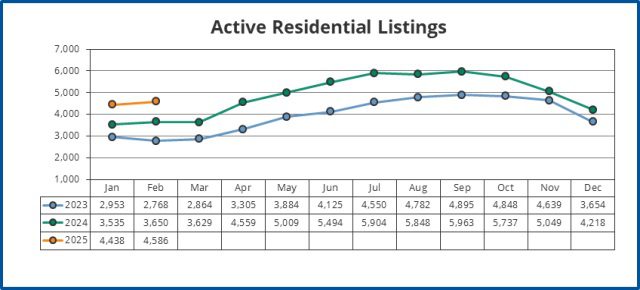
If we see a bear market in stock indexes, it should drive mortgage rates lower as the price of bonds are bid up in a flight to safety, lowering bond yields. The 15 year and 30 year fixed mortgage rates closely follow the yields of 10, 20, and 30 year treasury bonds. As investors sell stocks and buy bonds, that activity should put downward pressure on mortgage rates. There is talk of the Federal Reserve intervening by the summer, not only with rate cuts, but also the end of quantitative tightening (QT). Quantitative tightening has added approximately a 0.5% premium to the 30 year fixed mortgage rate over the last couple years as the Fed has unloaded mortgages from their balance sheet, flooding the market with mortgages. While the Fed stopping QT would increase housing affordability, I expect any material drop in mortgage rates will increase buyer demand to the point that bidding wars may become common place again in the Portland Metro. There is a housing shortage and the only thing holding back that kind of activity is 30 year mortgage rates bouncing between 6-8% since mid-2022. From 2016-2022, the Portland housing market was an extremely tight seller’s market. The only thing preventing that from recurring has been the lack of affordability of housing at present mortgage rates. While inventory might be 3.2 months right now, which signifies we are 0.2 months into a balanced housing market, from 2016-2022 the average inventory was only 1.71 months. What that means is if no more listings were put on the market over that time period, there was an average of only 55 days of supply of properties to buy on the market for 7 consecutive years. Essentially there were way too few homes for the number of buyers which many times resulted in bidding wars and buyers having to make large compromises on what they purchased. I’ll get more into the role of the Federal Reserve in a potential recession and it’s implications for the housing market in my next update. Anyone who was holding high risk assets and was hoping to use them to buy real estate just got whip-sawed by the drop in tech stocks and crypto as Portland home prices rebounded strongly at year’s end for the 5th consecutive year. If you are planning to buy a home in the next 24 months and are currently holding the money intended for your down payment in any higher risk areas, it would be prudent to convert your entire down payment into cash. On the bright side, most investors are still sitting on large gains after two years of back-to-back 20% returns on the S&P 500. There is still time to take profits and buy real estate while conditions remain relatively balanced.