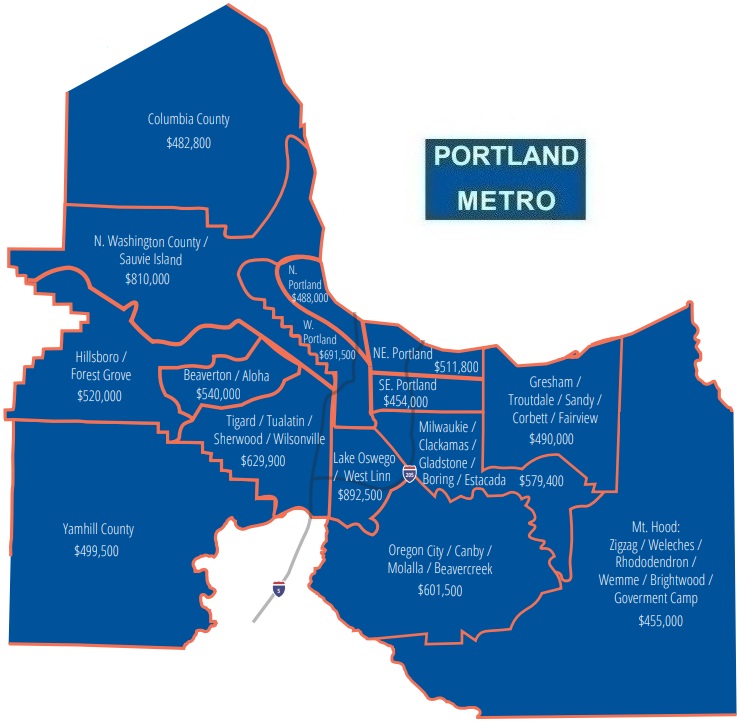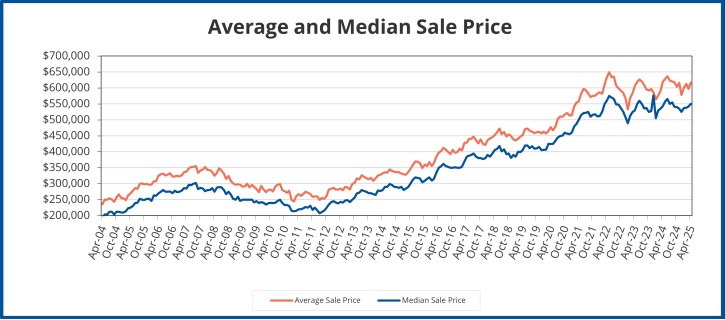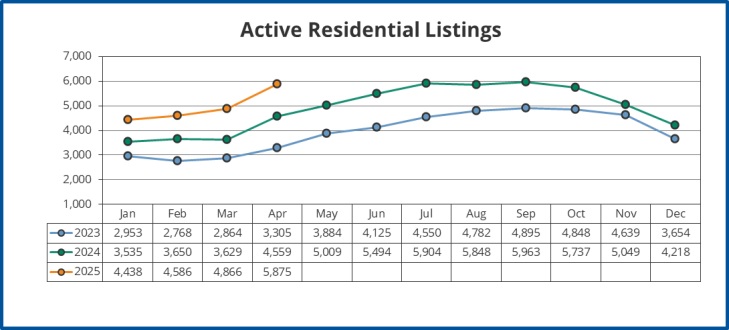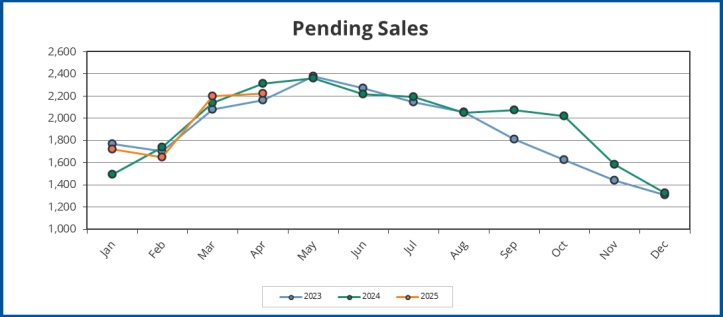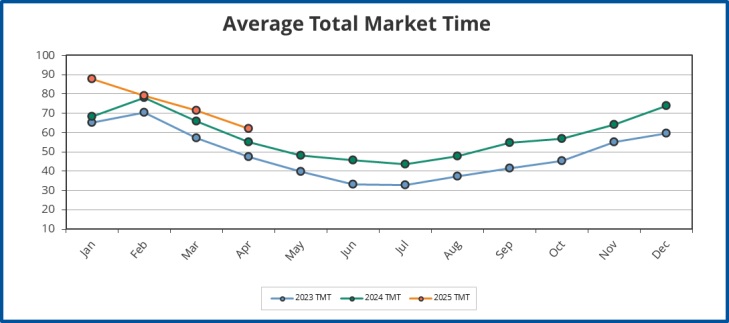
The average home price in the Portland Metro rose 3% in April. The average home price is now up 5.5% year to date. The inventory of listings ticked up to 3.1 months in April from 3 months in March. This barely puts the Portland Metro into a balanced market, which is defined by 3-6 months of inventory. Over the last 10 years, the Portland real estate market has only been in a balanced market 8.3% of the time while we were in a seller’s market the other 91.7% of the time. Even just barely being in balanced market conditions is an opportunity for buyers as it allows for more negotiability on the purchase price and concessions such as seller paid closing costs. As of the end of April, the average days on market for listings in the Tri-County had fallen to 55 days. My team was involved in multiple bidding wars representing buyers last week so market conditions are improving. My expectation is we will see more buyers looking at homes during the summer months as people who put off purchases in the early spring jump back into the market.
Mortgage rates are steady with the 30 year fixed rate averaging 6.86% across the United States this week. Inflation pressures appear to be easing with the Consumer Price Index (CPI) falling to 2.3% in April. Core CPI, which excludes more volatile energy and food prices, came in at 2.8%. The U.S. economy added 177,000 jobs in April which was above most economists’ expectations. The Federal Reserve opted not to change the benchmark lending rate at the conclusion of their meeting on May 7th. Fed Chairman Jerome Powell stated, “We believe that the current stance of monetary policy leaves us well positioned to respond in a timely way to potential economic developments. In the labor market, conditions have remained solid. Payroll job gains averaged 155,000 per month over the past three months. The unemployment rate, at 4.2%, remains low and has stayed in a narrow range for the past year. Inflation has eased significantly from its highs in mid-2022 but remains somewhat elevated relative to our 2% longer-run goal.”
One unintended impact of tariffs has been builders slowing how many homes are constructed. This is happening on a national, state, and local level. U.S. housing starts tumbled 11.4% to an annualized rate of 1.324 million units in March. However, a slight 1.6% rebound in housing starts was observed in April. Based on all available data, 2.3 million housing starts would be needed in 2025 just to maintain last year’s level of housing supply. With approximately 33 million Millennials still not owning a home, and 50 million Gen Zers behind them waiting in the wings to buy, housing supply in the United States as a whole is several million homes short. On a state level, it isn’t any better. According to Oregon State Economist Carl Riccadonna, “Oregon needs to build about 29,500 more homes each year, mostly in the Portland region and Willamette Valley, to emerge from a housing shortage years in the making.” Building permits in 2024 totaled only 14,000 in all of Oregon. Builders are meeting less than half the pace of residential construction that would be required to balance supply and demand for housing in Oregon by the 2040’s.
A National Association of Home Builders survey in April showed that building costs had risen 6.3%. I expect that to continue as recent estimates I have seen reflect more aggressive price increases for certain construction items. Essentially, what is happening is builders are pausing some of the planned construction of homes until they understand what their input costs are in order to meet a minimum expected level of profit. Looking at how home builders are behaving in our local market, some builders are pausing housing starts or shifting their attention to other states. For instance, Taylor Morrison sold a huge parcel of land on the west edge of Tigard to Lennar last year as they started pulling out of Oregon entirely. My expectation is that we should see home prices rise in some local areas, such as the west edge of Beaverton and Tigard, as builders stop attempting to undercut resale prices in order to move their inventory. The mentality of home builders is changing from trying to subsidize sale prices through offering under market mortgage rates to not building at all unless a higher sale price can be achieved. Home builders simply can’t continue to internalize additional price hikes in building supplies.
Once the existing new construction inventory sells, if base level tariffs of 10% remain in place I expect new construction sale prices in our area to rise approximately 10% as well. How quickly that will happen is hard to predict. However, in most areas approximately one third of new construction listings are under contract. There is off market inventory as well that’s harder to track. The existing inventory could be mostly gone within 3-5 months if no additional new construction homes hit the market. The lead time for new builds to restart would be 6-8 months so we could be looking at materially higher pricing in new construction sometime in the first half of 2026 in most of the west suburbs. Lake Oswego is a noted exception. As of May 23rd, no new construction houses were pending sale in Lake Oswego while 26 active listings have sat for an average of 128 days on the market.