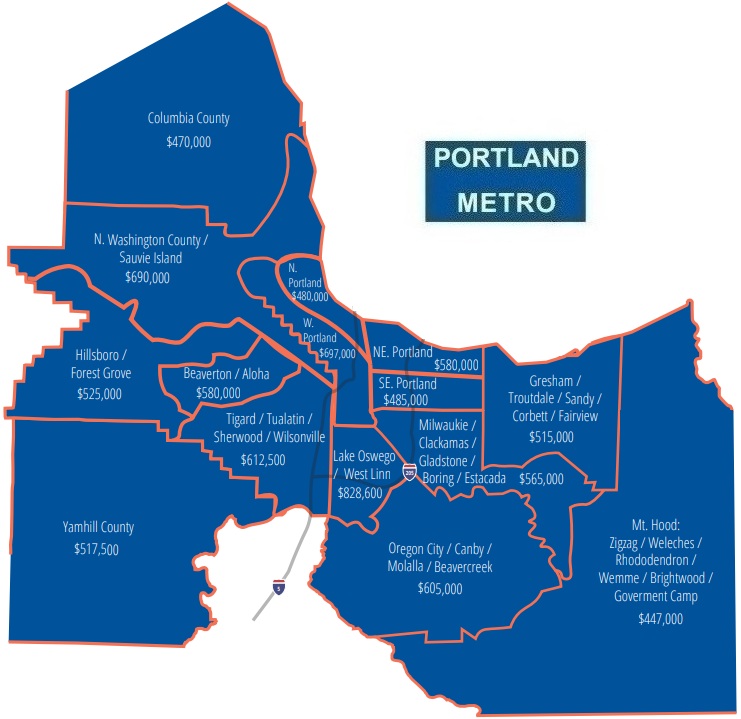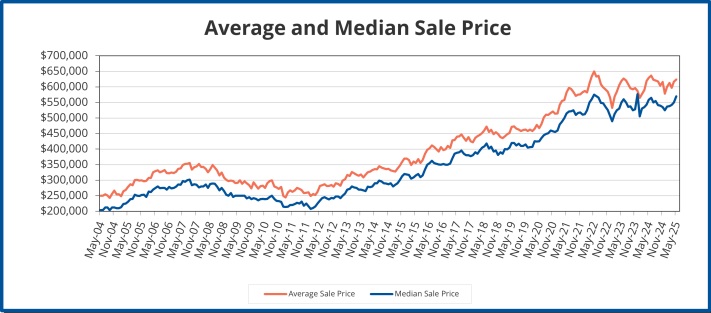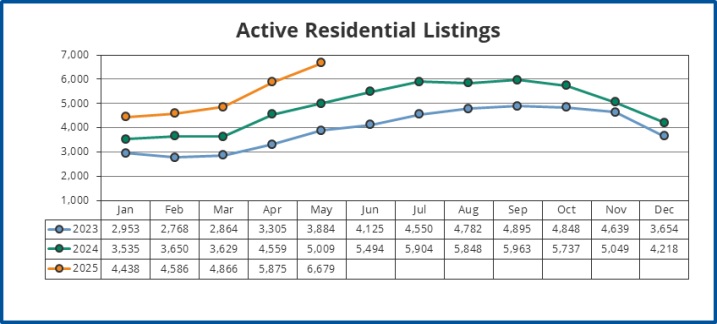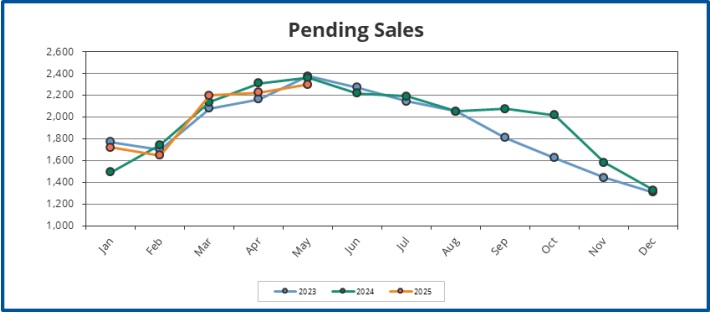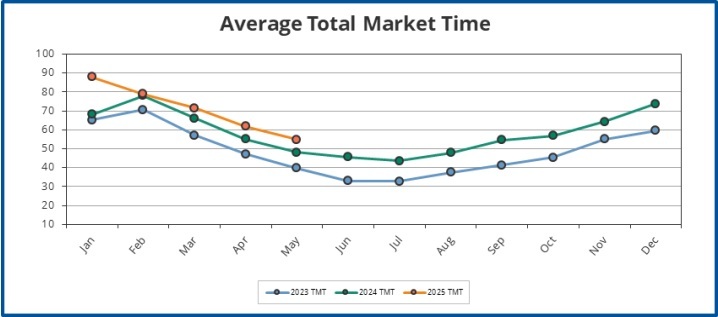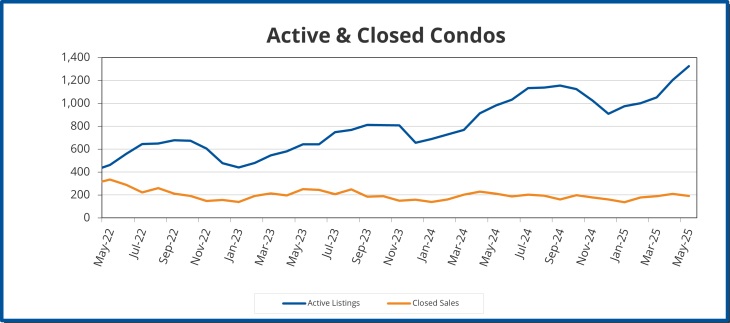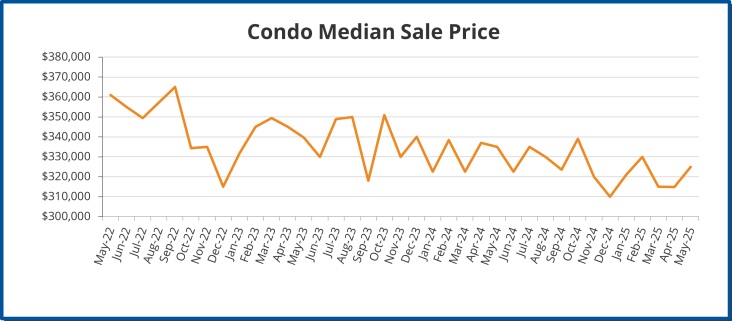
The average home price in the Portland Metro rose over 1% in May. Home prices are now up over 7% year to date. The inventory of available listings rose to 3.3 months so we are inching slightly further into balanced housing market conditions. Entry level houses continue to be the most active part of the market. My team saw bidding wars occur on multiple houses priced in the $500,000-$650,000 range last month. We also saw one house priced at $850,000 get multiple offers that was in a unique location with the largest lot in its community. This isn’t happening on most houses that are listed. Average days on market is just under 60 days for listings in the Portland Metro as a whole. Mortgage rates are steady with the 30 year fixed rate averaging 6.81% across the United States last week. One thing we have been seeing is a divergence in the price of different types of assets within the real estate market itself. The number of condos for sale, relative to demand, has increased substantially compared to the number of available townhomes and houses. In the Portland Metro area, the market for condos has shifted into a buyer’s market, which is defined by having over 6 months of inventory of available listings. I’ve attached two additional graphs at the bottom of this update that visually demonstrate what is occurring with our local condo market. This condo market shift is also occurring across the entire United States, with the deepest buyer’s markets in vacation areas such as Miami and Hawaii.
A simple explanation for what is happening ties into what condos are fundamentally, and the potential for financial mismanagement based upon this. Condo owners only own the property from the inside of the interior walls of their unit with the HOA collectively owning the exterior and all the land. This means the HOA is solely responsible for exterior maintenance. Most HOAs function by making decisions by committee. When a group of people make a decision collectively, they listen to all parties. Some owners in every HOA always push back on their monthly HOA fees increasing so there is always pressure for the HOA fees to remain lower than is necessary to keep pace with the rate of inflation. Over time, some HOAs fall far off track in budgeting to save enough money for exterior maintenance, such as a new roof and siding, causing budget shortfalls when the work can no longer be delayed. This results in special assessments. This is where the HOA asks each condo owner to pay anywhere from $10,000 up to $100,000 to cover budget shortfalls for repair costs. This is done as a lien against each condo so no owners in the HOA can escape being impacted. It also makes it harder to sell the condo units in the specific HOA during the time period from when the assessment is being discussed through the time repairs are completed. Typically only cash buyers can purchase properties in the HOA at this time; since conventional, FHA, and VA loans will not be approved due to increased financial risk. Given cash buyers are less than half the buyer pool, fewer buyers combined with the same number of sellers leads to lower prices. When the deferred maintenance is finally dealt with, loans are able to approved again. However, no buyers are buying condos with special assessments outstanding on them. The seller needs to pay off the full sum owing to find a buyer in this environment. Sellers also need to be realistic and list at a price that the market is dictating to be able to sell their condo.
Many condo developments that are well run are still seeing the value of the units fall over time, as HOA fees have increased drastically since 2020. Having studied approximately a hundred HOAs personally, I can attest that HOA fees will continue to rise. In many HOAs, we could see the monthly fees double over the next 10 years. This opinion is based upon state mandated reserve studies that look at future liabilities compared to the rate each HOA is saving for them. I also analyze budgets and balance sheets to see how well HOAs are following the recommendations in the studies. The impact of HOA fees doubling is it will keep a lid on condo prices for the foreseeable future. Even if we see mortgage rates fall in the next year or two, having a $1000/month HOA fee is going to factor heavily into affordability for buyers. Townhomes are different in the sense that their HOAs have less responsibility for exterior maintenance. For example, some townhome HOAs don’t cover roofs, siding, attics, crawlspaces and/or landscaping. This passes some or all of the exterior maintenance costs to individual owners, who tend to act more logically. Most duplexes don’t have an HOA at all. The owner of a townhome technically owns the exterior of the structure and some land, even if the HOA is responsible for maintenance. The owner of a duplex essentially owns one or both sides of a house with a shared middle wall and a shared roof. When a roof needs to be replaced and it’s just the household living under the roof making the decision, they tend to replace it in a timely manner. This is typically less common behavior when a group of people make a collective decision within an HOA. I believe the shift in the condo market has driven people to stretch budgets to buy entry-level houses instead. Hence us seeing bidding wars on entry-level homes that are move-in ready and attractively priced in many areas. In certain situations, owning a condo could still make sense. Older condo complexes are the ones mostly getting hit by assessments. Owning a condo is still better than renting in many cases. However, anyone with the means to buy a house or townhome should consider doing so before their HOA is assessed. If anyone would like me to look at their HOA documents for free, I would be happy to do so.
Another area where shifting trends are occurring is in the commercial real estate market. Office buildings downtown that used to be filled over the last decade were recently reported to have an average 35% vacancy rate by the Wall Street Journal. According to my team’s commercial real estate partner, Cameron Schwab with Keller Williams, “Office [space] is definitely the largest struggle and has continued to be in Portland. It’s similar for hospitality properties, which are measured by RevPAR, revenue per night per room. The difference is, for the most part, office [space] is doing generally well in the sub-markets. Smaller multi-tenant offices are doing better in the suburbs. Even multi-family has struggled. One could argue there might be a buy side opportunity based on cap rates because there hasn’t been a lot of product at certain tiers of quality that are being developed. There could be an opportunity in the next 3-5 years with rent growth.” This trend is hitting most major cities across the United States. Apartment buildings are faring better, which is starting to lead to conversions of office buildings to apartment buildings.
The other factor is how different types of properties are financed. You can’t buy a building with a 30 year fixed rate loan, like you can on a residential property. Typically, commercial properties are financed using a 5 year balloon mortgage. How these loans work is only interest is paid for the 5 year period and then the entire mortgage is due to be repaid at the end of the term. This results in owners refinancing every 5 years as each mortgage becomes due. The issue is, with interest rates roughly double what they were in 2020 through the first half of 2022, upcoming refinances will have double the carrying cost of what the payment has been over the last 5 years. Commercial properties that were purchased or refinanced between 2020-2022 will be coming up for renewal between 2025-2027. Personally, I think there are going to be defaults on some office buildings. Of all the types of commercial properties, they have fallen in value the most due to reduced revenue from vacancies. Now the carrying costs are about to double. One example is Bancorp Tower, which sold for $372.5 million in 2015, recently going up for sale for less than $100 million. Apartment buildings should fare better since apartment vacancies are lower and rents have risen substantially since 2020. I personally think houses are by far the most solid type of asset to own in the Portland real estate market. Most of the inventory is locked in at under-market 30 year fixed mortgage rates and demand continues to exceed supply. There isn’t a big driver for houses to be listed like there is with condos and some townhomes, as owners realize they need to get out of certain HOAs due to financial mismanagement. We already are seeing multiple offer situations on some houses. You can imagine what will happen if mortgage rates fall as more economic news comes out over the course of the year. Bidding wars will become more common place. Regardless of what happens to mortgage rates, it appears house prices will continue to outpace the rest of the residential real estate market for the next several years.