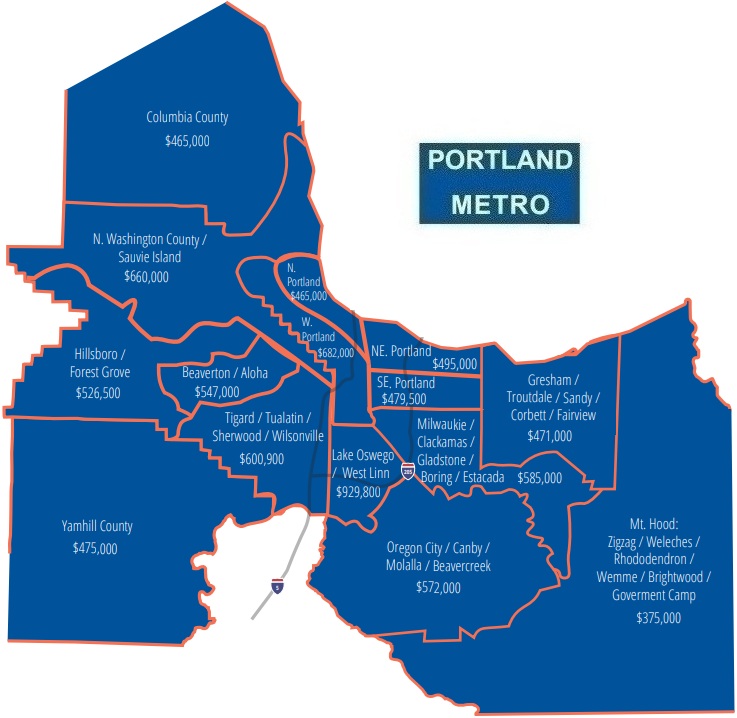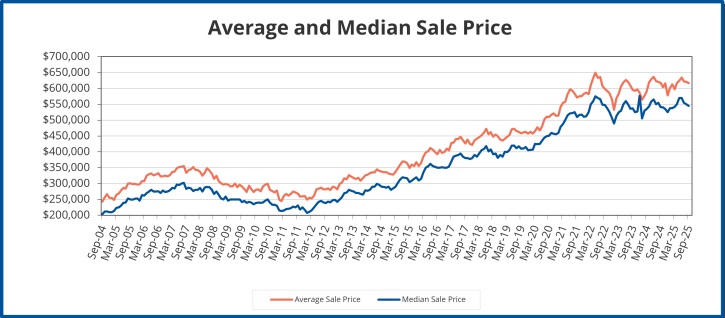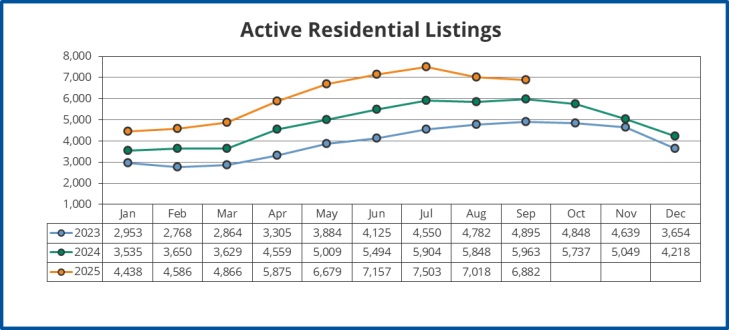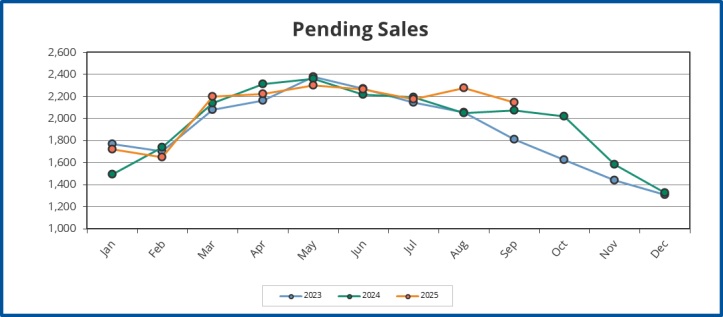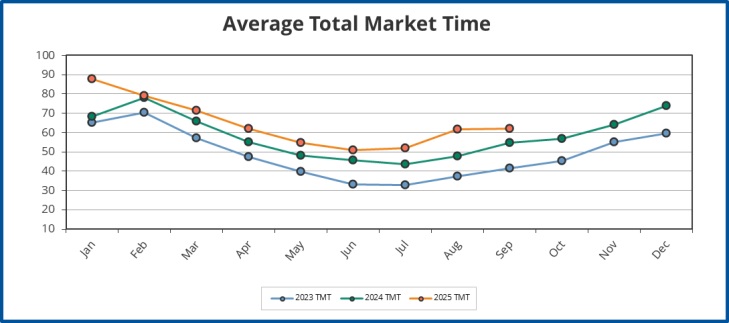
The average home price in the Portland Metro fell 0.5% in September. The inventory of listings increased to 3.8 months from 3.5 months in August. I believe this is a result of more houses coming onto the market in response to lower mortgage rates. Things have stayed busy with another 7 offers written by our team and one of our listings going pending since my last market update. I’ve been on a streak lately with 9 of the last 11 offers I have written while representing buyers being accepted. I have closed 7 sales since my last update and another 3 are scheduled to close before month’s end. The market for detached houses will gradually tighten but it probably won’t be in a straight line, hence the increase in inventory around Portland. At the same time, the Portland condo market tightened down to 6.5 months of inventory in September. Housing inventory on the Northern Oregon Coast also dropped to 5.1 months which is the lowest level it has been all year. I helped 2 clients close on investment properties in Lincoln City and Nehalem this month. Every housing market in Oregon has been behaving a little differently lately. Prices are rising in some areas and falling in others. The same goes for the supply of homes on the market.
The main driver of housing market activity will continue to be mortgage rates. The 30 year fixed rate averaged 6.19% across the United States this week according to Freddie Mac. The Bureau of Labor Statistics is included in the Federal government shutdown; which means no official job numbers or inflation data has been released by them this month. The Consumer Price Index (CPI) is set to be released tomorrow, 10 days after it was initially scheduled. There are alternative sources of information such as the ADP National Employment Report, which stated the U.S. economy shed 32,000 jobs in September. We will probably see continued weakness in the job market, which ultimately will continue to provide further downward pressure on mortgage rates. The more rate cuts that are priced into bond prices by the free market, the lower bond yields and mortgage rates will fall through the end of the year. The bond market is currently pricing in a 99% probability the Federal Reserve will cut the benchmark lending rate by 0.25% during their next meeting on October 29th.
On October 10th, the President tweeted that the U.S. could add an additional 100% tariff on all Chinese imports. This was in response to the tightening of controls on the export and use of rare earth metals by the Chinese government, which are critical to the AI and semiconductor industries. The only market that was open at the time was cryptocurrency. Bitcoin fell almost 10% in overnight trading in response to the tweet. Any increase in tariffs would be expected to pass price increases onto U.S. consumers and increase the rate of inflation. An additional 100% tariff on goods imported into the United States by China would impact consumers and manufacturing supply lines, ultimately making it more difficult for the Federal Reserve to cut interest rates. I should note that the President mentioned that an additional 100% tariff was “not sustainable” last Thursday. Likely the threat of such a large tariff is being used as a negotiation tactic to try to get China to remove export curbs on rare earth metals. Hopefully, it might not come to pass given how much it would hurt the U.S. economy in the short term.
There was some volatility in the stock market last week as the market processed the risks of a reinvigorated trade war with China along with mixed corporate earnings. In September, auto parts firm First Brands and subprime car lender Tricolor Holdings declared bankruptcy. On October 13th during the Chase Bank earnings call, JPMorgan Chase CEO Jamie Dimon stated “everyone should be forewarned on this one.” He was referring to the risk that more firms might experience solvency issues. We didn’t have to wait long for that prediction to come true as a couple regional banks reported large losses on their loan books last week. Zions Bancorp and Western Alliance Bancorp both reported large write downs on loans which caused the U.S. banking sector as a whole to drop 3% on October 16th. European banking stocks fell 3% in overnight trading as well. Stock prices have since stabilized since the banking sector is mostly unimpacted at this stage.
Looking further under the hood, some banks tapped into the Federal Reserve’s short-term lending facility for a combined $15 Billion over Wednesday and Thursday last week. This is another sign of some underlying liquidity issues in the banking sector. The Federal Reserve has been allowing mortgage backed securities (MBS) and treasuries to mature off its balance sheet for the last 40 months. The process of a central bank reducing debt off its balance sheet is known as quantitative tightening (QT), which makes the cost of borrowing money higher. Banks are tapping the Fed’s overnight lending facility because it is the cheapest option left to cover their short term borrowing needs. The Fed’s QT program will likely end this year. Banks tapping the overnight lending facility demonstrates that the Federal Reserve’s policies are taking out too much liquidity from the financial system at a time when small regional banks are again under some stress. That was the main driver of the Fed starting their last quantitative easing cycle, which helped push mortgage rates into the 2-3% range. Portfolio managers at PIMCO, the world’s largest bond fund, recently estimated quantitative tightening adds a 0.2-0.3% premium to mortgage rates. The Fed reversing course could very well be what pushes mortgage rates under 6% for good if it happens. While the banking sector issues might not necessarily be bullish for stocks, they could be a catalyst for home prices to rise. I have seen more money pulled from the stock market to invest in housing this month than any month in my career. It’s probably not a coincidence given current market conditions.