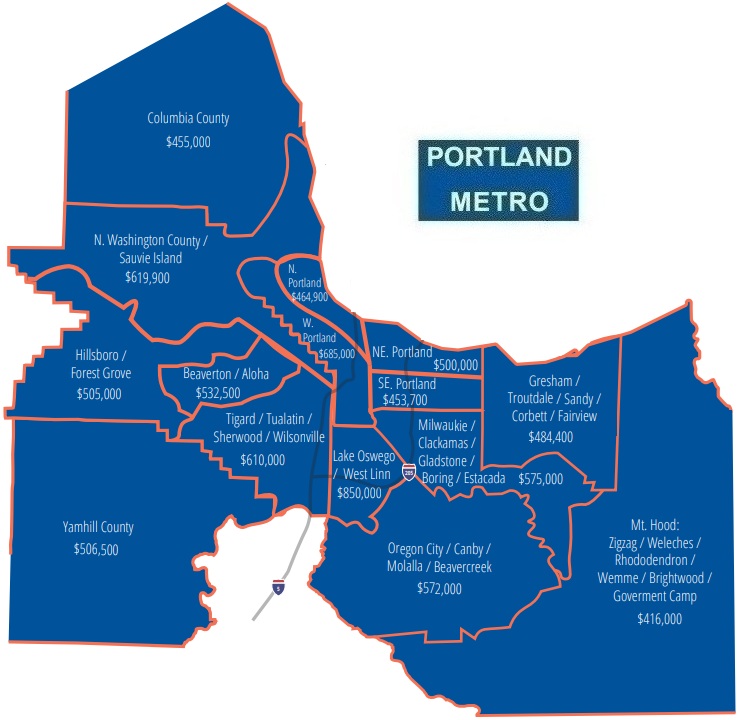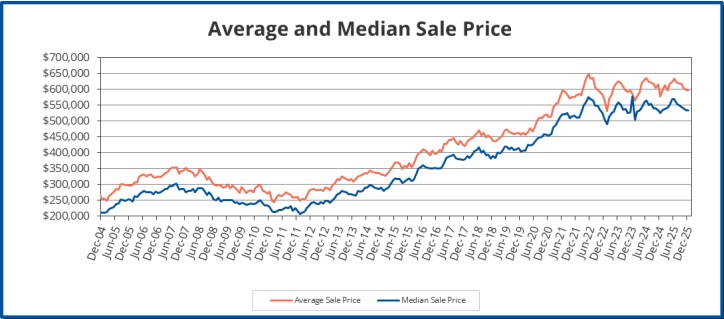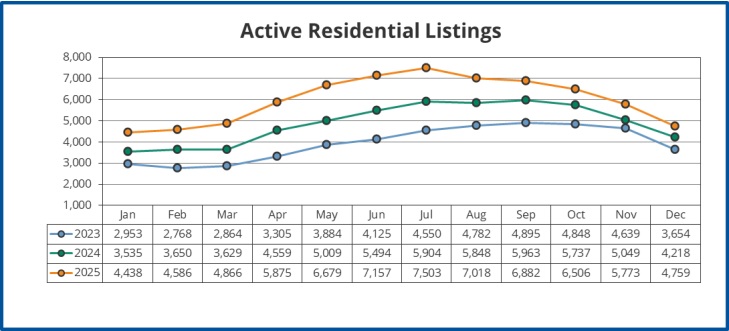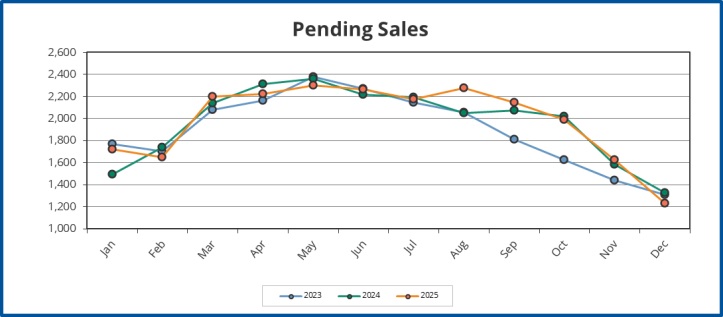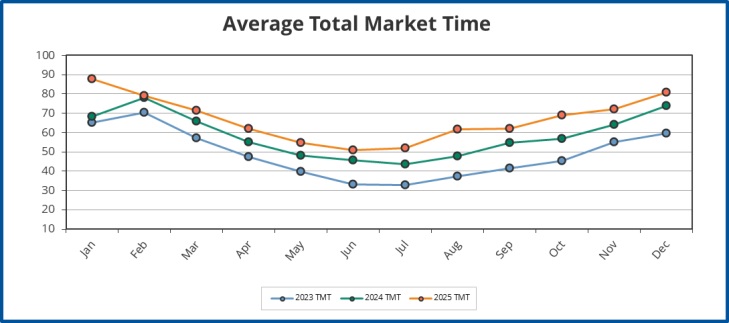
The average home price in the Portland Metro was virtually flat in December. Mortgage rates were likely already playing a role in higher activity levels around New Years. Our team was negotiating 4 sales at the same time as the New Year’s Ball dropped. We have put 10 properties into contract so far in January. Now that we are a few weeks into 2026, some of the inventory is definitely getting taken out by buyers who want to take advantage of lower mortgage rates before the market becomes too competitive. Inventory fell to 2.9 months at the end of December so we have already seen the Portland housing market technically shift back into a seller’s market.
We have been seeing very large swings in the amount of inventory of available listings. Inventory is calculated by dividing the number of listings at month’s end by the number of closed sales during the month. This allows for considerable fluctuations if substantially more homes sell in one month vs the next month. Over the last 4 months, inventory swung from 3.8 months in September to 3.1 months in October. Then it went back up to 3.8 months in November, and now finally fell to 2.9 months at the end of December. In 2025, we had the highest average inventory in the last 10 years at 3.375 months. However, that still barely put Greater Portland into a balanced market, which is defined as 3-6 months of inventory. If housing inventory stays under 3 months, this would signify the housing market is tightening as we head into the spring market. This is the opposite of what happened last year. Once most of the inventory sells, new listings will start coming onto the market at higher prices. This has started to occur sometime between January and February throughout my career. Portland home prices have risen at least 10% from January through July for 4 consecutive years. With mortgage rates the lowest since September 2022, it appears highly likely this will occur for a 5th consecutive year.
On January 9th, the 30 year fixed mortgage rate finally went under 6% for the first time in 40 months. Since then it has rebounded slightly with the 30 year fixed rate averaging 6.09% across the United States last week. In reality, the rates being offered by many lenders are lower than this as they compete for business. We saw the end to the Federal Reserve’s quantitative tightening in December which is finally starting to push mortgage rates lower. The Fed’s halting of their interference in the mortgage market is a major factor in the premium of mortgage rates over bond yields starting to diminish. On January 11th, it was announced that the Federal Reserve Board of Governors were being served with grand jury subpoenas related to testimony about the renovations to the Federal Reserve buildings to the Senate in June 2025. This started a strong upwards movement in the price of gold. In just over two weeks since this happened, gold has increased in value by 13%. Any sense of the loss of Federal Reserve independence increases the perception of U.S. debt being higher risk among international investors. This is resulting in the selling of U.S. debt by foreign central banks, which lowers the value of the U.S. dollar while pushing U.S. interest rates higher. A lot of the proceeds from the sale of U.S. treasuries is going directly into gold, which is now the 2nd largest reserve currency in the world. The U.S. dollar index is down over 2% since January 16th. The biggest barometer of free trading interest rates is the 10 year treasury yield. It had increased from a low of 4.13% on January 13th to 4.231% as of Friday.
Based on having the lowest mortgage rates since 2022, anyone looking to buy a property in the short-term needs to understand that there likely will be twice as many buyers competing for homes in 2-3 months. Every sign points to the upcoming spring market being the most active it has been in the past 4 years. Getting ahead of that and buying at the winter pricing is saving buyers who are acting now tens of thousands of dollars off the price. We have seen the housing market tighten already. For instance, virtually all of the cheapest houses in Bethany from a couple weeks ago are now pending sale. Any remaining listings that were sitting over the winter offer an advantage to home buyers given they still have increased negotiating leverage on those properties relative to new ones that come on the market. Many sellers of homes listed through the winter are agreeing to prices under asking, closing cost credits and/or completing some repairs. Some builders are even offering under-market mortgage rates on their inventory, such as 4.99% on a 30 year fixed rate mortgage. When a decent chunk of the remaining inventory of homes sell, builders will raise prices and stop offering the same incentives. In the resale market, prices will be firmer with fewer concessions for buyers as listings come on at progressively higher prices in February, March, April and May.