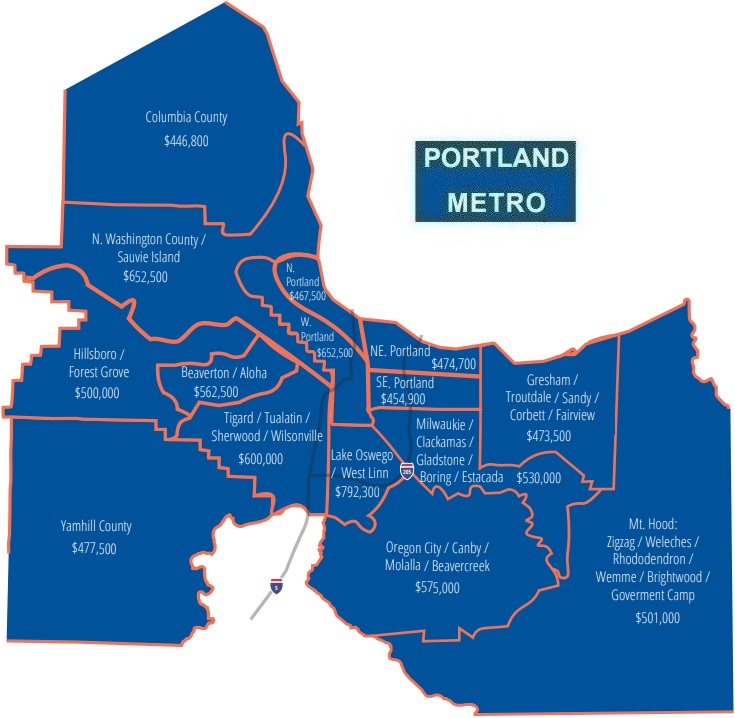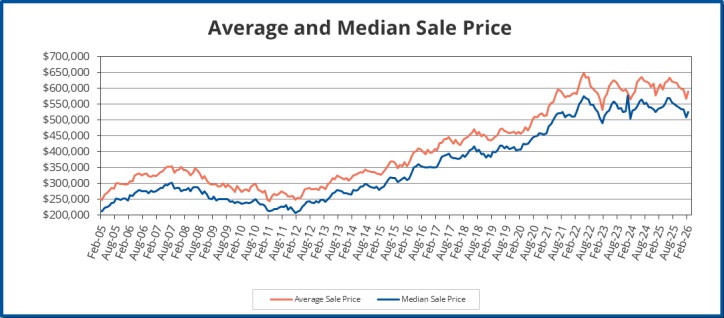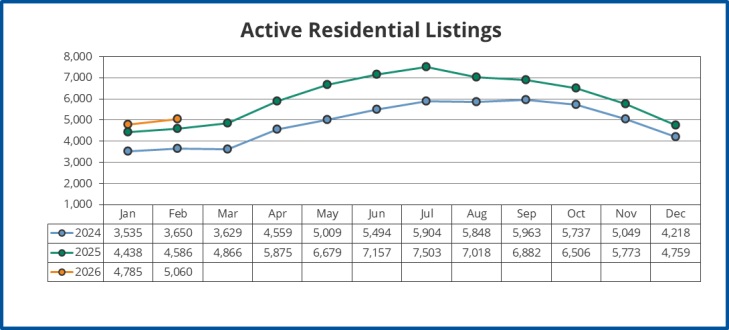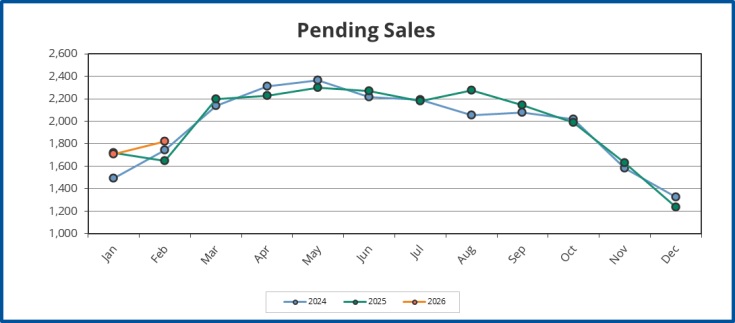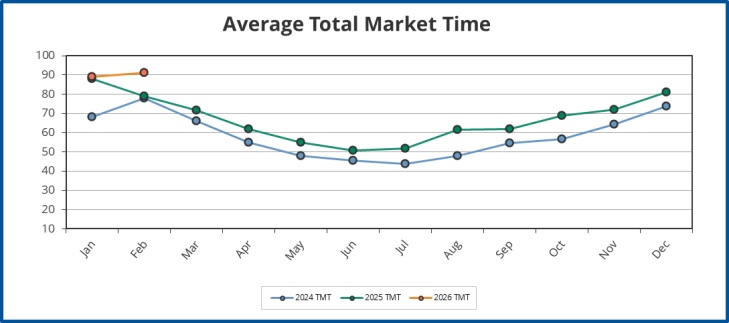
The average home price in the Portland Metro rose 4% in February. The number of closed sales rose 26% as the inventory of listings fell to 3.6 months. This means that if no more properties were listed today, there would be no more listings on the market by early July. This level of inventory signals we are in a balanced housing market. If inventory drops under 3 months, that would put the Portland Metro back into a seller’s market. I had expected this could occur at some point in the next few months as we approach the spring market, which is the strongest seasonal period of the year for housing. My team was involved in 1 bidding war on a listing and 5 bidding wars while representing buyers over the last 33 days. I know of other teams that had been involved in bidding wars while submitting virtually every single offer this year as of March 12th. Certain areas, such as pockets of NE and SE Portland or Lake Oswego, have hotter activity and certain price points are also hotter than others. As a team, we have unique strategies to avoid competition while representing buyers which probably led me to underestimate the number of multiple offer situations that were happening, especially as our clients took advantage of slower activity levels in January. A lot of the inventory is still sitting with buyers having negotiating power on most properties. The properties that get special attention are very well priced, perceived to be move in ready, and located in certain areas there is increased demand to live in. One thing to keep an eye on is rising mortgage rates might be reversing the trend of the market tightening as the conflict in Iran ensues.
The 30 year fixed rate averaged 6.38% across the United States this week. There are two conflicting themes in deciding the direction of mortgage rates. The weak job market is putting downward pressure on interest rates while increased inflation expectations is putting upward pressure on interest rates. On March 6th it was reported that the U.S. economy lost 92,000 jobs in February. The unemployment rate is still near historical lows at 4.4%, but we have seen ongoing revisions to job growth. Five of the last nine months are now showing net job losses for the U.S. economy as the initial job numbers are continually revised downwards after the fact. The lack of accurate immediate data about the job market spans multiple administrations and relates to how the data is collected. There are assumptions that are made to fill gaps in data that cannot be filled by month’s end which lead to overestimates of job growth virtually every month. The labor market should continue to put downward pressure on mortgages rates. However, inflation expectations have been rising and putting upward pressure on interest rates as the global economy experiences an energy shock.
The United States started bombing Iran on February 28th to dismantle their nuclear program and force a change in regime. Typically these actions are done on the weekend when financial markets are closed in order to avoid too much volatility. The market did react at the start of the trading week following the start of the conflict. The prices of Western Texas Intermediate (WTI) and Brent Crude, which is the oil pricing used in over 70 countries, both rose $10/barrel within a couple days of trading. U.S. stock indexes plunged 3% in intraday trading on March 3rd as the administration announced the war could be prolonged. Stock prices subsequently recovered but then continued to fall with the Nasdaq down 12% and the S&P 500 down 8% from their all-time highs in late January. The issue is the Straight of Hormuz is a very tight area between Iran and the United Arab Emirates (UAE) where about 20% of the world’s oil passes through via tankers. As of March 4th, Iran was saying they “had complete control of the straight” as it faces a blockade. The U.S. military subsequently has destroyed all the mining ships in the Iranian fleet. At this point, no insurance companies are offering to insure any tankers trying to cross the straight since removing all threats along such a narrow corridor is very difficult. This has led 20% of oil supply in the world to be effectively halted until the conflict is resolved.
The global economy is very sensitive to the price of oil. Any disruption in supply that increases energy prices acts as a headwind to global economic growth. Right now the price of WTI is sitting at $98/barrel with domestic gas prices having increased approximately $1/gallon across the nation. In economics, a situation where energy prices rise too quickly is known as an energy shock. Higher energy costs act like an additional tax on transportation and the flow of global trade, which mostly is still done via freighters, cars, and planes using diesel, gasoline, and jet fuel, respectively. Several years ago I wrote about an energy shock likely leading to a global recession and in that case it did play out that way. I am not sure if such a short-term spike in energy prices will cause much of a prolonged drop in global economic growth. It will depend how long the Iran conflict continues to disrupt supply. The hope would be the conflict ends quickly to not have an ongoing impact. However, that is yet to be seen.