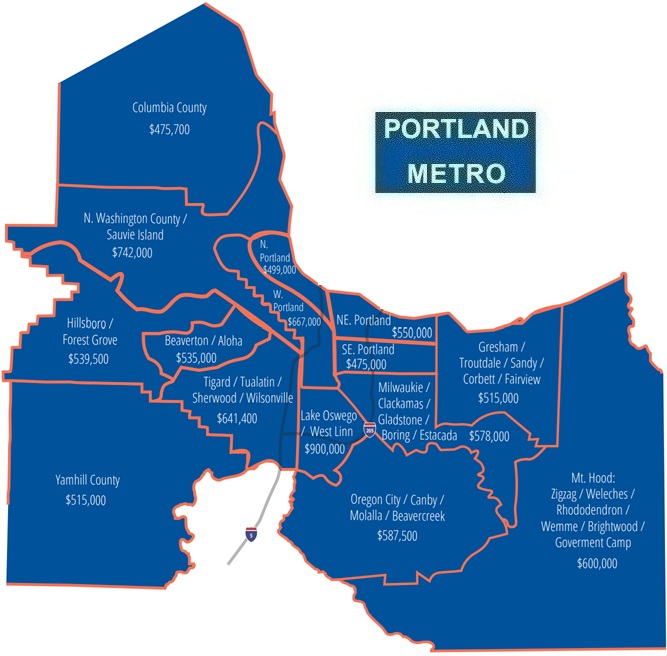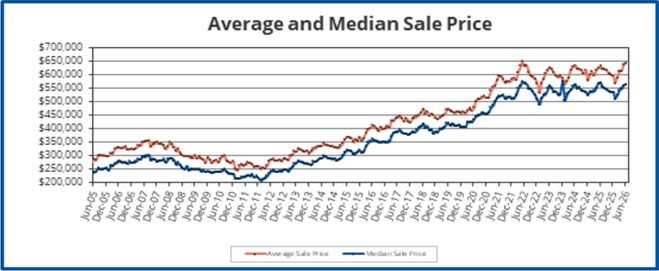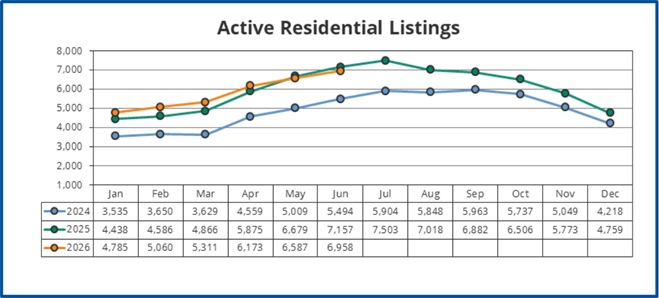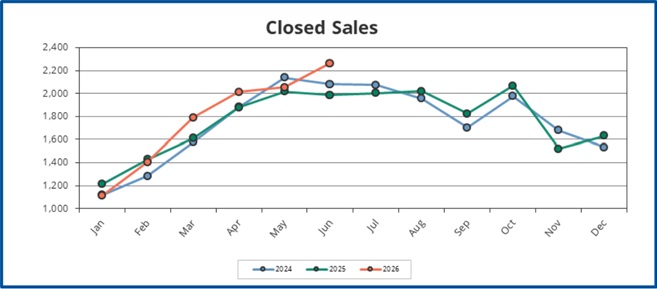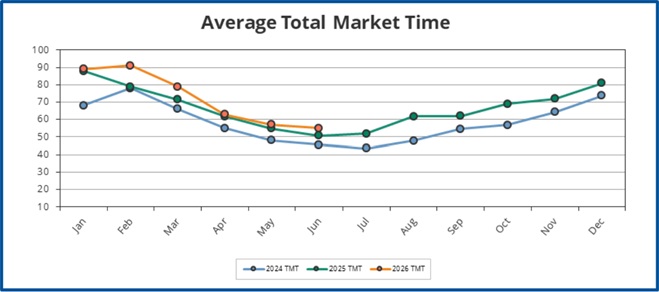
The average home price in the Portland Metro rose 1% in June. 2,263 home sales closed in June, which is the highest number of home sales in a single month in the Portland Metro since August of 2022. The number of sales has been steadily rising all year with June having 10% more closed sales than in May and 14% more closed sales than in June 2025. It’s hard to find a single factor to attribute this to but renewed strength in the local job market is likely driving more home sales. The semiconductor space is doing extremely well. Some of the semiconductor companies are publicly traded, such as Intel and Lam Research, which is giving employees substantial down payments to put on real estate from stocks acquired through stock purchase plans. Another factor that could be contributing is migration into Oregon. Last year, Oregon was the #1 state in the nation for inbound migration according to United Van Lines, the largest interstate moving company in the United States. 64.5% of the traffic they reported was inbound to Oregon versus only 35.5% outbound, the best ratio of any state measured. Oregon has started to see a resurgence as an attractive destination to move to domestically. I think this is mostly benefitting the suburbs of Portland, comprising Washington, Clackamas, and Yamhill County, rather than Portland itself. However, in 2025 we also saw a pause from previous years of population declines in Multnomah County. There was a minor increase in the population of Multnomah County in 2025 relative to 2024.
The 30 year fixed rate averaged 6.58% across the United States this week. Mortgage rates have remained elevated due to higher inflation. However, some relief appears to be on the horizon. The Consumer Price Index (CPI) showed the annual rate of inflation fell to 3.5% in June relative to the 3.8% inflation rate in May, which was the high water mark for the year. The recent reopening of the Strait of Hormuz provided relief to energy prices across the globe. The price of U.S. oil, also known as West Texas Intermediate (WTI), fell from a high of $117/barrel on April 7th to under $70/barrel in late June and early July. While an increase in hostilities with Iran has pushed WTI back over $80/barrel in recent days, energy prices remain much lower than we saw from March through May. This has had positive implications for shipping costs and manufacturing, not to mention at the gas pump.
The other major factor is tariffs. There was an economic theory brought forth by the Federal Reserve Bank of San Francisco that one year after the initial implementation of tariffs, we would see the rate of annual inflation slow by approximately 1% while we would see a resurgence in inflation in years 2-3 as increased prices drive up labor costs, especially in service-based industries. There are other economists that have theorized given tariffs are a one-time event, inflation would steady at the one year mark. The idea is that if you implement a 10% tariff on imports, when the next year rolls around, there isn’t a second increase that comes through. There isn’t another 10% tariff stacked on top of the original tariff year after year, it’s a one time event. That theory supports the argument that the impact on consumer prices has already played out in supply chains at this point. Unless there are future increases in tariffs, we may not see any additional inflation from their use. We’ll have to see which theory is correct, if tariffs are still in place in 2027-2028.
The way tariffs were originally implemented was under the International Emergency Economic Powers Act, which is only able to be used in the case of an “unusual and extraordinary threat… to the national security, foreign policy, or economy of the United States.” On February 20th, the Supreme Court ruled that the application of tariffs under this wartime measure was unconstitutional without Congressional approval. The significance is that the new measure used to implement tariffs on February 24th was Section 122 of the Trade Act of 1974, which limits tariffs to 10% and they can only remain in effect for 150 days from the date of their implementation. That means the new tariffs expire on July 24th. However, the next tool the administration will use is Section 301, which allows tariffs for up to 4 years in response to other countries trade practices. There are two ongoing investigations into other countries trade practices that will likely be used to impose tariffs under Section 301 before the beginning of August. One investigation is on forced labor and involves 60 countries that are U.S. trading partners, accounting for 99% of U.S. imports. The second investigation involves 16 trading partners and is looking at the dumping of goods on the global market. The results of either investigation could be used to renew tariffs for a longer duration so U.S. consumers likely won’t see immediate relief from tariffs for the time being. If Congress takes back control of foreign trade at some point, that could lead to the partial or complete elimination of tariffs, which could provide some relief on prices and ultimately put downward pressure on mortgage rates. It would certainly also play a role in home building costs going forward. Many of the commodities and types of equipment used to build U.S. homes are sourced from outside the United States.