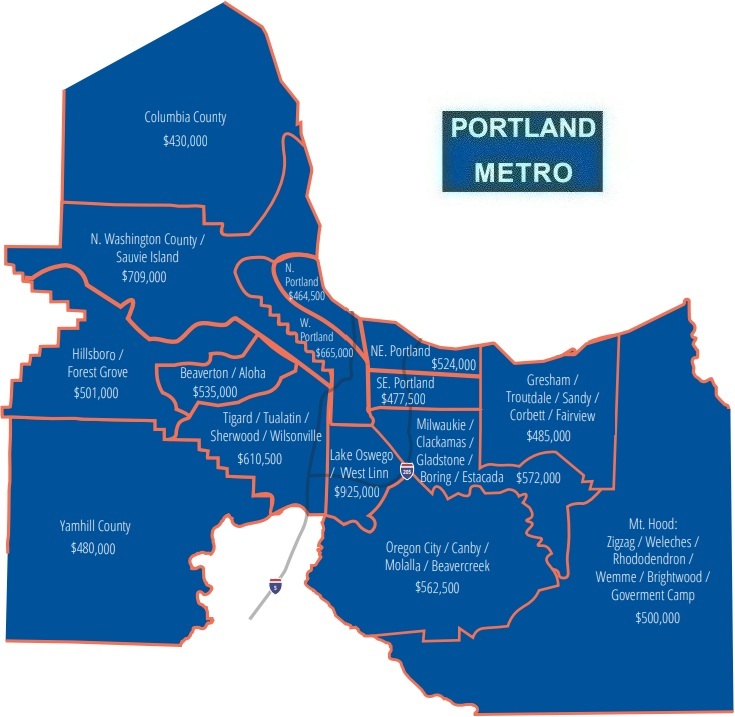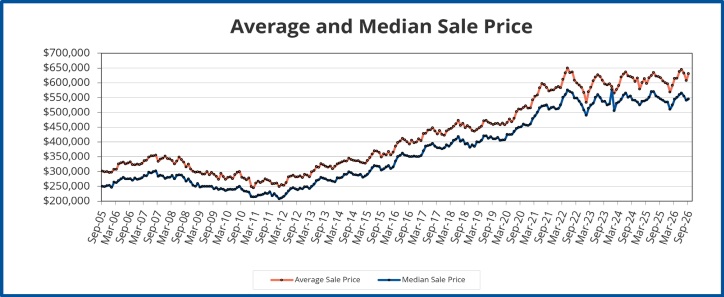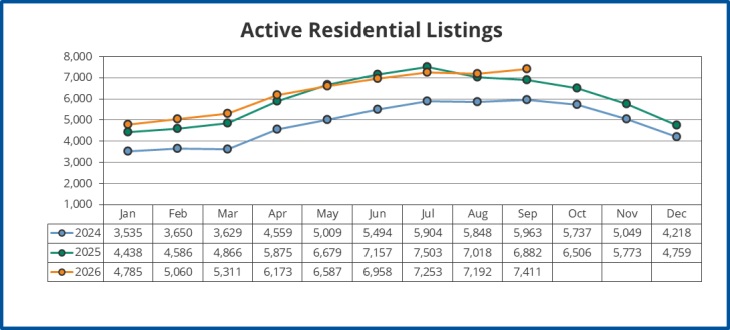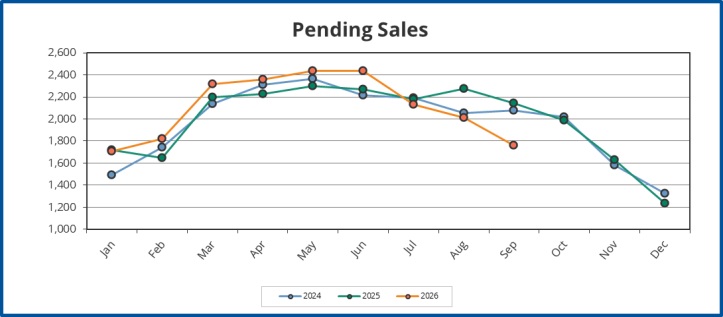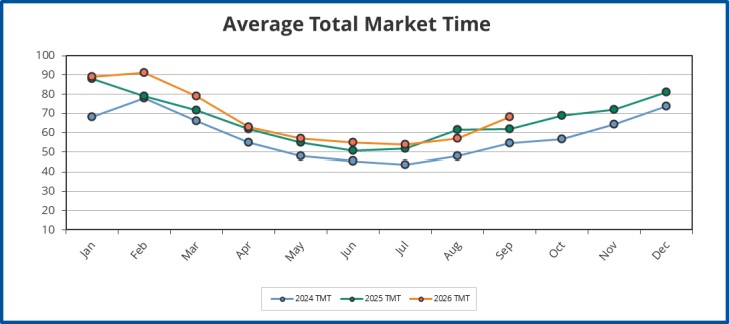
The average home price in the Portland Metro rose almost 4% in September. However, the sales I have been negotiating in October signal that home prices are falling and I expect that to continue through year’s end. Higher mortgage rates combined with seasonal weakness in prices are the main drivers. Local real estate prices tend to decline from August through December before strongly rebounding in January or February. The inventory level of listings rose to 4.2 months in September. This is the highest level of inventory we have seen in Greater Portland since January and indicates market conditions are becoming more balanced. Mortgage rates are putting additional pressure on the housing market right now but that won’t figure into the average home price for a month or two as the sales being negotiated now close in November and are reported in December. I have negotiated $104,000 in concessions for buyers this month as mortgage rates shifted more negotiating leverage into the hands of buyers.
The 30 year fixed rate averaged 7.32% across the United States last week. The uptrend in government bond yields throughout September continued into October with the peak in interest rates occurring the week of October 5th. While higher mortgage rates would generally be considered a negative for the housing market overall, I believe higher rates have brought forth changes that would have occurred by December anyways. With higher rates, I have been able to negotiate some sizable price concessions and seller credits to be applied towards mortgage rate buy downs. It’s a stark change after seeing many multiple offer situations in July and August due to unusually fierce competition in the local housing market during the late summer. The current environment appears to be a short-term buying opportunity if anything. An almost identical spike in mortgage rates occurred from September through October in 2023. From October through December that year, buyers had more negotiating power than usual, even as the 30 year fixed rate fell from a peak of 7.79% on October 26th to 6.61% by year’s end. We were back to participating in bidding wars the week of Christmas in 2023, which is a few weeks earlier than normal for the market to heat back up.
On October 14th, the rate of inflation accelerated, with the Consumer Price Index (CPI) showing a 3.7% year over year increase. This increased bets of the Federal Reserve hiking rates again at month’s end. The job market is looking weaker with the U.S. economy only adding 29,000 jobs in September. There was also a 60,000 downward revision in previously reported job gains. While weakness in the job market likely means the Fed won’t be able to hike nearly as many times as the bond market is pricing in, the bond market is still pricing in 4 future rate hikes. Free trading bond yields, which dictate interest rates on everything from car loans, to mortgages and government debt, just fell from 24 year highs. There is a good chance interest rates will stabilize before we approach the seasonally stronger time for housing in January. The U.S. Treasury will start selling less long-term debt at these interest rates in November which will take pressure off long-term interest rates. The U.S. government makes quarterly adjustments to their treasury sales and the next one will occur November 4th. In 2023, this was the primary catalyst for mortgages rates falling heavily in November through December that year.
Whether you look at the stability of the banks, the commercial real estate market or the stock market, there is stress in the financial system from higher interest rates. Some banks are holding a substantial amount of 10, 20 and 30 year treasury bills on their books. They are not required to show the losses on their balance sheets, which could be as high as 50% of the underlying value of the bonds right now. In the commercial real estate market, the main theme is office vacancies as more workers work from home, going back to changes in the workplace adopted during the Covid-19 Pandemic. This is causing commercial property investors to walk away from some buildings as the 5 year mortgages negotiated at 2020-2021 interest rates come up for renewal. There is speculation in the bond market that the circular financing used to buy semiconductors for the AI buildout isn’t sustainable. All eyes are on CoreWeave who is of the largest buyers of Nvidia chips. Nvidia has lent around $100 billion out to companies that are mostly not profitable, who then turn around and use the money to buy Nvidia’s chips. The interest rates on CoreWeave’s bonds shot up to 15% recently as the stock dropped considerably, dragging Nvidia’s share price down with it. As long as interest rates continue to fall from here, some of these issues will resolve themselves, but certainly these are areas I will continue to watch closely.
Residential housing is not the area of the economy primarily impacted by higher interest rates. While a 7.32% 30 year fixed rate seems high, the housing market has functioned for decades with mortgage rates at these levels or higher. The average 30 year mortgage rate was 9.06% in the 1970’s and 12.71% in the 1980’s. In the 1990’s the 30 year fixed mortgage rate averaged 8.12%. The structure of the market is also unusual, similar to the early 1980’s, with a lot of the housing inventory locked away because of an increase in mortgage rates. As of the beginning of 2026, 50% of residential mortgages in the United States had an interest rate under 4%. Another 39% of residential properties in the United States have no mortgage whatsoever. Combined up to 70% of available properties are mostly locked away from being listed. In many cases, houses are only being listed if the sellers are moving states, have a family outgrowing their home, in the event of divorce, going into a care home, or the owner passing away. Many prospective sellers turn their homes into rentals instead of listing them since rents are higher than the carrying costs of many properties. The owners can therefore derive an income from renting their property rather than selling their home. Mortgages are much harder to qualify for compared to the early 2000’s because of stricter legislation for residential mortgages that was introduced after the Great Recession. This shows up in the very low residential mortgage foreclosure rates. Presently, foreclosed properties account for only 1.5% of residential listings across the country.