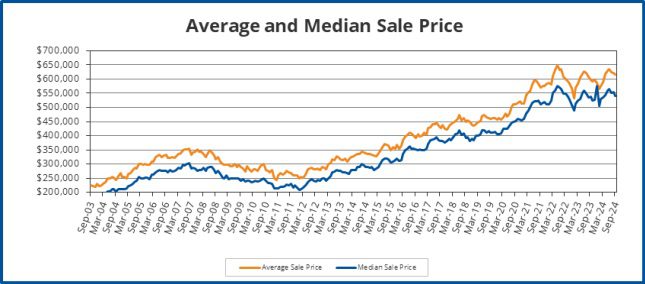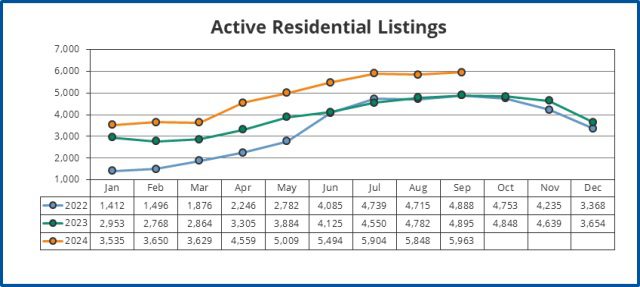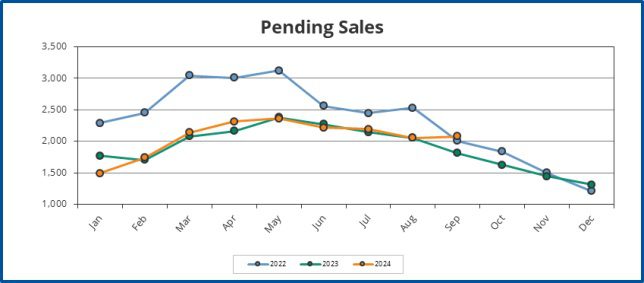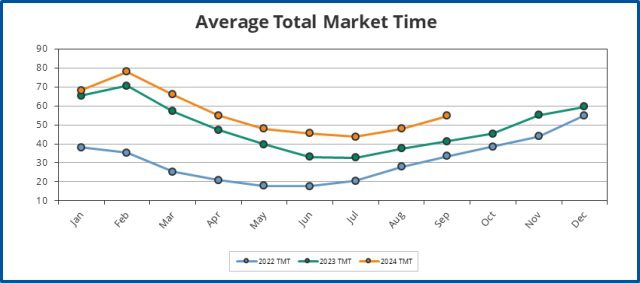
The average home price in the Portland Metro fell under 1% in September. The inventory of listings rose from 3 months in August to 3.5 months in September hitting the highest level since November 2023. The local housing market has moved further into a balanced market which is defined by 3-6 months of inventory. Inventory is calculated by dividing the number of active listings on the market by the number of closed sales in the previous month. Meaning if we saw the same pace of sales in September over the next few months, it would take until late January for all the current listings to sell if no new listings came onto the market starting today. However, home sales that closed in September were mostly negotiated in August before the Fed’s 0.5% rate cut. There are indications that market conditions are starting to improve in certain areas. I witnessed a few bidding wars while securing 2 properties in SW Portland for clients over the last couple weeks. It was surprising how aggressively buyers in SW Portland were bidding over the list price with the offers pushing $25,000-$40,000 over asking. We are only seeing the inventory get taken out in very specific areas such as SW Portland and Lake Oswego for now. As time goes on, more listings will sell as additional buyers are drawn into the market by lower mortgage rates.
The 30 year fixed rate averaged 6.32% across the United States this week following a surprisingly strong jobs report that came out last Friday. The US economy added 254,000 jobs in September with the unemployment rate falling from 4.2% to 4.1%. This was unexpected given how quickly the rate of unemployment rose from January through July of this year. The jobs report pushed mortgage rates higher as bets shifted strongly towards only a 0.25% rate cut by the Federal Reserve at their upcoming meeting in early November. That being said, these numbers need to be taken with a grain of salt. In late August, the US Bureau of Labor Statistics revised job growth estimates they had provided between April 2023 and March 2024 downwards by 818,000 jobs. Of the 2.9 million jobs they reported were added in the United States over that period, 30% of the hirings never happened. There are a number of reasons the US Bureau of Labor Statistics had problems accurately reporting job growth that I will not get into. I will say that the present job numbers are not necessarily reliable. We could see further deterioration in the labor market and it might not show in any official statistics for a few months. Even so, these reports still affect the stock market, bond yields and mortgage rates so they do matter.
There were some recent catalysts to be a little more optimistic about the US economy. The Fed’s surprise 0.5% rate cut last month along with their projected rate cuts through next year reassured the market that the Federal Reserve is not asleep at the wheel. However, we are still in the very late stages of this economic expansion so the risk of a recession still looms over the US economy. In China, the government has hinted they will be doing a massive stimulus package to try to spur an economic recovery there. Chinese monetary stimulus could increase consumer demand in the world’s second largest economy. China is a huge trading partner of the United States so what happens overseas will have some impact on economic growth at home. Regardless if mortgage rates have increased since the last Fed meeting, I still feel the overall trajectory of mortgage rates is down. Any negative economic data will ultimately help the housing market and hurt the stock market as it continues to trickle out. We are seeing more buyers in the market as the large drop in mortgage rates crosses more people’s radar. While home buyers react to the headline Fed rate cuts, what the bond market thinks the Fed will do is as important, if not more important, than what the Federal Reserve does in real time. Mortgage rates are determined by the yields of free trading bonds so sentiment is very important. Federal Reserve Chairman Jerome Powell has to say the right things or the Fed’s policy changes could be undermined by negative sentiment.
Inventory is close to the highest level I have seen since I started selling real estate in 2017. With higher inventory, buyers have more selection than usual. I have shown or previewed over 30 listings over the last few weeks and many of the listing agents have personally reached out to me for feedback due to the lack of traffic. To combat this, home builders have been offering very aggressive incentives to attract buyers such as large closing cost credits, under market mortgage rates and free appliances. However, builders are now starting to pull back on some of their incentives as more buyers come into the market. Seeing the housing market heat up in SW Portland provides a window into what could happen to the rest of the Portland Metro as mortgage rates continue to fall. We will probably see more aggressive buyers in nearby cities as we get further into the Fed rate cut cycle. The exact timing of this is uncertain but I am thinking December could be an unusually busy month if mortgage rates continue to fall. For now, most buyers still have lots of negotiating power and plenty of homes to choose from.