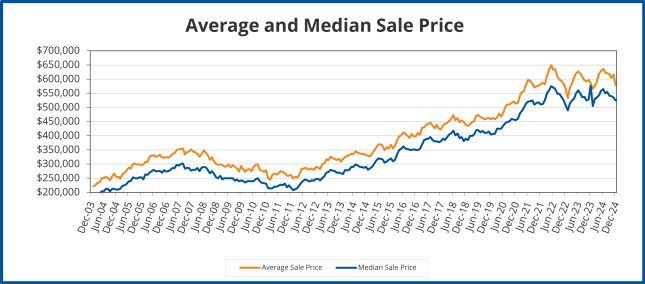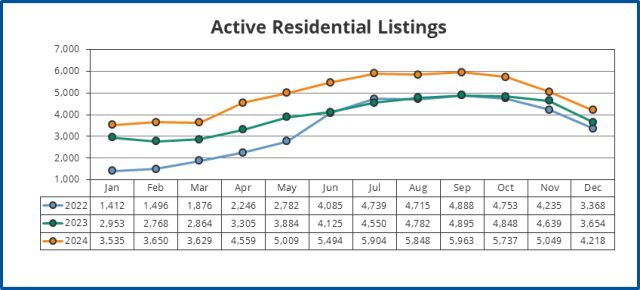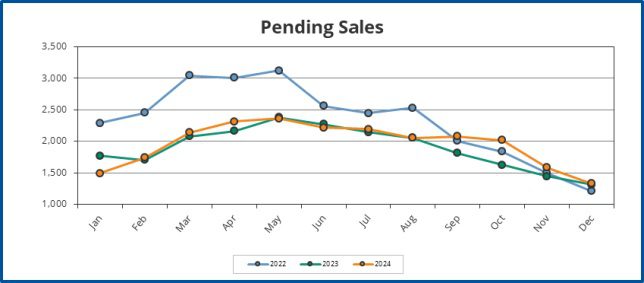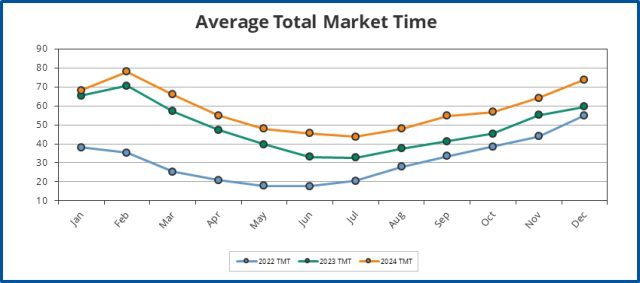
The average home price in the Portland Metro fell 6% in December while the median home price fell 2%. This indicates that the drop was mainly concentrated among homes well above the median home price. The 2% rebound in prices in November was premature. However, home prices usually bottom out in December or January so this is exactly what I would expect to see. Market conditions have already improved since the start of the new year. The inventory of listings in the Portland Metro fell to 2.7 months at year’s end. This means our local real estate market has shifted back into a seller’s market for the time being. We are seeing a more active market especially for houses priced under $600,000. As we get closer to the spring market, most of the inventory will sell and then new listings will come onto the market at progressively higher prices. The percentage of listings that result in bidding wars will increase as well. I know of a few houses listed under $500,000 in SE Portland that each received several offers recently. I haven’t heard of any intense bidding wars in the west suburbs yet but this will inevitably occur at some stage, especially if mortgage rates cooperate.
The 30 year fixed rate averaged 7.04% last week. Mortgage rates have been on the rise as speculation of the Federal Reserve pausing rate cuts through June gets further priced into bond yields. It didn’t help that the jobs report for December came in hotter than expected on January 10th. The U.S. economy added 256,000 jobs in December as the unemployment rate fell to 4.1%. The rate of inflation came in slightly lower than expected in December with the Consumer Price Index (CPI) rising 2.9% over the previous 12 months. One bright spot was core CPI, which strips out more volatile food and energy costs, fell from 3.3% to 3.2%. This is the first time we have seen a drop in core inflation since July. Core CPI is the Federal Reserve Board of Governor’s 2nd most watched inflation metric after the PCE Index. Certainly, if core inflation continues to trickle lower that would bode well for lower mortgage rates in the 2nd half of 2025.
The stock market failed to have a Santa Claus Rally for the 2nd consecutive year. The last 5 trading days of the year along with the first 2 trading days of the new year have been positive 77% of the time going back to 1950. The S&P 500 fell 1.61% this time around. While the historical implications of two failed Santa Claus Rallies in a row is not great, the market did very well following the previous failed rally with the S&P 500 rising 23% in 2024. Historically, the S&P 500’s average return in years without a Santa Claus Rally is 5%. If the Santa Claus Rally occurs, the average return has been more than twice as high at 10.4%. In time periods when a Santa Claus Rally fails to occur twice in a row, the market has had at least one bad year. This occurred in 1994-1995 and 2015-2016 with 1994 and 2015 being the years that the stock market contracted. However, the negative return was only 1.54% and 0.53% respectively.
If the stock market rises 20% in back-to-back years, like it did in 2023-2024, the market contracts 50% of the time in the 3rd year. When the market has fallen in the 3rd year, it has dropped 14.93% on average. When the market continues to rise following years of 20% back-to-back returns, it rises 12.78% on average. While it is unclear if 2025 will be a down year or not for equities, I would be cautious. There certainly could be less risk in shifting some stock gains to less volatile asset classes as the year progresses. The direction of the stock market in January dictates the performance of stocks through year end 77% of the time as well. As I have been writing this piece, the S&P 500, Nasdaq, and Dow Jones have bounced from being in negative to positive territory in reaction to the drop in core inflation last Wednesday. The trading action over the next couple weeks might help validate if 2025 will be a good year for equities. If things deteriorate in the short term, moving funds out of tech stocks and crypto into other asset classes might not be a bad idea.